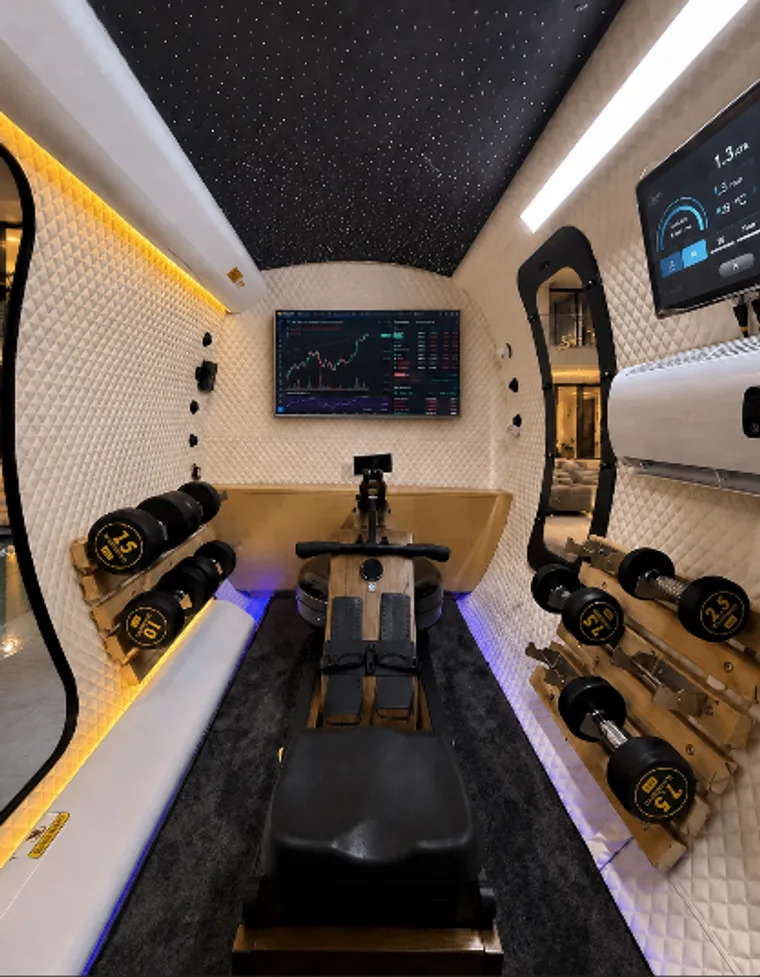
Start from your booking pattern, not the equipment. A physio or sports clinic adding hyperbaric, red light or both is really deciding three things: how much floor and power it can give up, how many staff hours each session costs, and which of its clients will book it. The equipment follows from those answers.
This guide sets out what each option asks of a clinic. It does not pick one for you, because the right set-up for a two-room physio practice and for a high-volume sports clinic are different answers. If you want the equipment fundamentals first, how a hyperbaric chamber works covers the vessel and the pressure, and the commercial chamber guide covers what changes when a chamber runs back to back all day.
What is the real difference between hyperbaric and red light for a clinic?
Session length and the step in front of the first session. Almost everything else follows from those two.
Hyperbaric runs long. A session usually runs 60 to 90 minutes, plus the time to get in, bring the cabin to pressure, bring it back down and reset it. Plan an initial consultation with each new client before their first session, so they know how a session runs and you know they are a fit for the booking.
Red light runs short and has fewer moving parts. On Helia, a session is 10 to 15 minutes, full body, set on a touchscreen timer. There is no pressure, no oxygen supply and no cabin to seal, so the on-ramp for a new client is a walk-through of the bed and the timer, and it fits around more of your client list and more of your day.
Neither is the better choice in general. A hyperbaric chamber is a longer, higher-commitment booking that clinics often sell in packs and memberships. A red-light bed is a short booking that slots in around appointments that are already in the diary.
How much space and power does each one need?
More than the footprint alone suggests, and the power is often the harder part.
A hard-shell chamber is a permanent occupant. Atlas One, the sit-up single-person chamber, takes 0.89 by 2.00 m of floor and weighs 700 kg, before clearance around it. It runs from two standard 10A power points, each ideally on its own circuit, and the Advanced Oxygen upgrade adds a 15A circuit for the oxygen unit. Altura One is the lay-down alternative at 0.90 by 2.20 m.
A soft-shell chamber moves. Aria needs approximately 3.7 by 1.7 m with clearances, the cabin itself weighs about 10 kg, and it runs from a standard power point with no electrician. It runs from 1.3 to 1.5 ATA and does not take Advanced Oxygen, so it is a flexibility choice rather than a like-for-like swap. The hard-shell versus soft-shell comparison sets the two formats side by side.
A red-light bed needs serious power. Helia is 2.27 by 1.30 m closed, needs 800 mm clear along the long side people board from, and weighs 400 kg. It runs on a dedicated 32A single-phase supply, hardwired by a licensed electrician, and it must not share a circuit with a chamber. In an older clinic fit-out, that supply is usually the long pole, not the floor.
Planning the room covers measuring the space and the path in. It is written for homes, but the doorway, floor and power checks are the same in a clinic.
What does each one ask of your staff?
Hyperbaric asks for trained operators and their time. Red light asks for a few minutes at each end of a booking.
Operator training is included with every hard-shell chamber. Train at least two people. A single trained operator is a scheduling constraint, and it shows the first time they take leave. Whoever is on shift also runs the initial consultation, so a new hyperbaric client costs more staff time on their first visit than on any visit after it.
Helia runs from its touchscreen. Choose red, near-infrared or both, set the timer, and the bed handles the rest. That is why it suits a clinic where the front desk or an assistant starts the session between other appointments.
How does session length turn into bookings per day?
Work it on paper before you look at a specification. The figures below are worked arithmetic for illustration, not equipment claims.
- Find the real slot length. For hyperbaric, that is the session plus getting in, pressure up, pressure down and the reset. If that comes to 90 minutes door to door, a nine-hour clinic day holds six bookings per cabin.
- Do the same for red light. A session of 10 to 15 minutes, full body, plus changeover, might make a 20-minute slot. The same nine-hour day holds twenty-seven.
- Set that ceiling against demand. If your realistic hyperbaric demand is below six a day, one cabin covers it. If it is above, the question becomes a second cabin or a two-person chamber, and that is a room question first.
- Count staff hours, not just slots. Six long bookings and twenty-seven short ones put very different loads on whoever is on shift.
A two-person cabin changes the arithmetic for hyperbaric. Aurora seats one or two and Solaris Duo seats two, so each slot can carry two bookings. It also needs a bigger room, which is why it is a decision for once your booking pattern is known.
Which set-ups do physio and sports clinics consider?
Three patterns come up most. Each one suits a different clinic, and none of them is the default.
One hard-shell chamber. A dedicated room, a long booking, a pack or membership model, and a trained operator on shift. It suits a clinic that wants hyperbaric as a service in its own right and can give up a room to it. The oxygen system is the decision to spend the most time on, because Advanced Oxygen is specified at order and cannot be added later. Continuous flow vs BIBS explains the two systems, and the entity comparison sets them out spec by spec.
One red-light bed. A short booking that sits alongside existing appointments, run by whoever is at the desk. It suits a clinic that wants to add something without adding a consultation step or an operator. The 32A supply is the thing to check first.
Both, in one room or two. A long, considered booking and a short, frequent one. It suits a clinic with the floor and the power for both, and it spreads the investment across two kinds of client. Plan the two power supplies separately, since the bed cannot share the chamber’s circuit, and keep the bed’s boarding side clear of the chamber door.
A soft-shell such as Aria fits around any of the three as a second cabin. It adds hyperbaric capacity without a second fit-out and moves between rooms as your bookings change.
Which of your clients is each one for?
Look at who already books with you, not who you would like to attract.
Hyperbaric suits clients who will commit an hour or more, come back on a rhythm, and book a pack or membership. That is often a smaller group who book more often. Red light suits more of your existing list: people who can spare a short session before or after an appointment they were coming in for anyway.
Mobility matters for the hyperbaric choice. A sit-up cabin and a lay-down cabin are not interchangeable when you do not control who books. Helia is a lie-down bed people board from the long side.
A self-check before you plan the room
Run through these before any call. If you can answer most of them, the conversation goes straight to your room.
- How many sessions a day do you expect, at what length? Write the number down for each option you are considering.
- Which room, and how big is it? Measure the floor, the doorway and the path in from the street.
- What power is there? Check for spare 10A circuits, room for a 15A circuit, and whether a dedicated 32A supply can be run to the room.
- Who will run it? Name the people who would be trained, and who covers when they are away.
- Who will book it? Look at your client list and estimate who would commit to a long session and who would add a short one.
- How will you price access? Single sessions, packs, memberships or add-ons to an existing appointment.
- What changes in a year? If demand grows, is there room for a second cabin or a two-person chamber?
How Hyperbaric HQ helps with the set-up
We do the implementation. We specify the equipment against your room and booking pattern, confirm the layout, power and delivery route, then deliver, install and commission it and train your operators. Your clinic runs the sessions. Install and service are AU-wide.
Bring your answers to the self-check to a call and we will map them onto a floor plan and a configuration, with pricing confirmed in a custom quote.