What is a hyperbaric oxygen chamber?
A hyperbaric oxygen chamber is a sealed vessel you sit or lie inside while the air pressure around you is raised above the pressure at sea level. Hyperbaric simply means higher than normal pressure. The chamber does two jobs at once. It holds you in a pressurised environment, and it feeds oxygen to you through a mask. That is the whole idea in one sentence. Everything else is engineering around those two jobs.
It helps to separate the chamber from the delivery. The chamber is the pressure vessel, a rigid steel shell with a door that seals, a window, a seat, and a control screen. The delivery is how oxygen reaches you inside it. Those are two different systems, and understanding the difference is most of what people are really asking when they ask how a chamber works. We cover the delivery side in depth on the oxygen systems hub, and this page is the plain-language overview that sits above it.
A quick note on language. On the specs you will see precise terms like ATA, purity percentage, and continuous flow. In plain reading we use warmer terms, Standard Oxygen for the everyday delivery and Advanced Oxygen for the sealed-mask upgrade. Both describe the same equipment. We keep the precise terms for the technical tables so nothing gets lost in translation.
How does the pressure actually work?
The pressure part is mechanical, and it works on the same principle whether the shell is steel or fabric. Once you are inside and the door is sealed, the chamber raises the internal air pressure in a slow, controlled ramp. Pressure is measured in ATA, short for atmospheres absolute. One ATA is the pressure you are sitting in right now at sea level. A hard-shell chamber like Atlas One is built to hold a range up to 2.0 ATA, which is roughly the pressure you would feel about ten metres underwater.
The shell is what makes that range possible. A rigid stainless-steel vessel holds a true, stable pressure that a soft fabric chamber cannot reach or hold as consistently. That is the core reason the material matters. A sealed steel body reaches a higher pressure point and keeps it steady for the length of a session, where a soft-shell tops out lower. The soft-shell chamber guide covers that lower range in full, and where a fabric shell is still the right piece of equipment. If you want the honest side-by-side on shells and oxygen setups, the continuous flow vs BIBS comparison walks through what each arrangement suits.
The ramp up and the ramp down are handled by the chamber itself. A touchscreen runs the sequence so the same steps happen the same way every time. You are not turning valves or watching a gauge. The equipment does the controlling, and that consistency is the point of a hard-shell built for a home rather than a one-off visit somewhere.
It is worth being clear about what ATA describes and what it does not. ATA is a number about the equipment, not a number about you. It tells you the pressure the vessel is rated to reach and hold, in the same way a car has a top speed the engine is built for. A vessel rated to 2.0 ATA is holding twice the pressure of ordinary sea-level air at its ceiling. That rating is set by the shell and the seals, which is why two chambers that look similar from the outside can sit in very different places on this scale. When you compare chambers, the pressure rating and the shell material are the two equipment facts that travel together, and they are the honest starting point before anyone talks about what a session looks like.
How does the oxygen reach you?
Pressure alone is only half the story. The other half is how oxygen gets from a concentrator into the air you breathe, and there are two systems for that.
The standard system is continuous flow. An oxygen concentrator draws in room air, strips out most of the nitrogen, and pushes concentrated oxygen through a steady-flow mask. It runs the whole time, whether you are breathing in or out, which is simple and reliable. In effective delivery terms a continuous-flow mask puts you at roughly seventy percent effective oxygen, because some of the flow escapes around the mask between breaths. We explain the mechanism in full on continuous flow explained and on the continuous flow entity page.
The upgrade is BIBS, a built-in breathing system. Rather than flowing constantly, a BIBS mask is inhale-activated. It delivers oxygen when you breathe in, and routes your exhaled breath out of the chamber. Because almost none is wasted, effective delivery climbs to close to one hundred percent. On Aurora, for example, the built-in breathing system, chosen when you order, delivers around ninety-eight percent oxygen at the mask while the cabin air itself stays at ordinary, non-enriched levels. The trade is cost and a slightly more involved fit. The full picture is on BIBS explained and the BIBS entity page.
Neither system is a secret. Both are ordinary equipment choices, and which one a chamber ships with is a fact you can read off a spec sheet rather than something you have to take on trust. The reason the delivery system matters as much as the pressure is that they are doing different things. The pressure sets the environment you are in, and the delivery sets how much oxygen actually reaches the mask. A chamber can hold a strong pressure and still deliver oxygen inefficiently, or the reverse, so the two figures are read together, not one instead of the other.
The comparison below sets the two systems side by side using equipment facts only, so you can see exactly what each delivers before you talk to anyone.
What is the chamber actually made of?
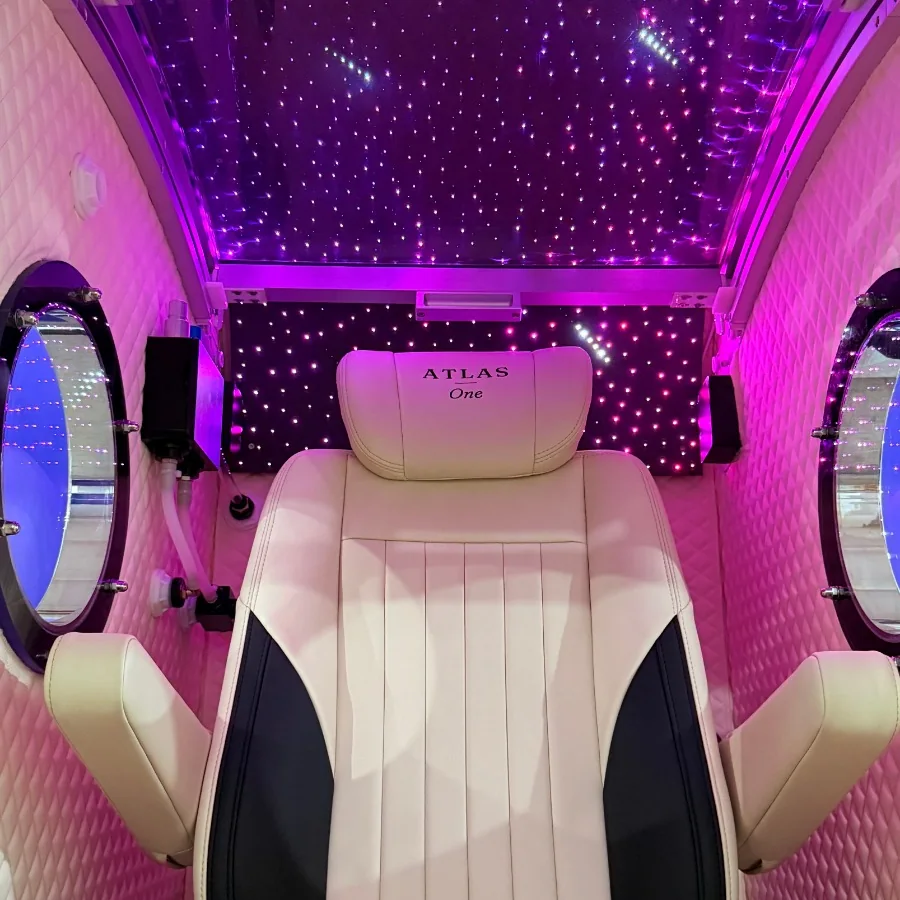
Under the finish, a hard-shell chamber is a short list of parts. There is the pressure vessel, usually 304 stainless steel. There is a sealing door and one or more optically clear windows, so the space feels open rather than boxed in. There is a seat or recliner, one or two touchscreens for control, and the oxygen delivery hardware, either a continuous-flow concentrator or a BIBS setup. Ambient lighting, climate control, and an optional media screen are comfort layers on top of that core. The hard-shell chamber guide goes further on the vessel itself, the sit-up and lay-down formats, and the room each one needs.
Size is the practical question most people reach next. A single-seat hard-shell chamber occupies roughly the footprint of a large armchair with clearance around it, and it needs a way in on delivery: a doorway it can pass through or, for a chamber that does not fit one, installation in sections. It runs on standard household power; some setups need a dedicated 15A circuit, which we confirm on the call. If you are working out whether a chamber fits a specific room, planning the room for your home oxygen chamber covers doorways, clearances, and power so you can measure before you commit.
Ownership is the last piece of what a chamber is. What you buy is the hardware, its delivery and installation, operator training, and a service line for the life of the unit. The chamber is equipment you live with and run yourself, not a booking you drive to. That ownership model is the reason the shell, the delivery system, and the footprint all matter more than they would for a single visit somewhere else.
What this page does not cover
There is a difference between how a chamber works and how you would run one. This page covers the what, meaning what the equipment is, how the pressure and oxygen systems work, and what you own. How you would actually use a chamber day to day, the session structure, and the pressure and timing that suit your situation, is a conversation rather than a web page. We work that out with you on a short call, against your space, your rhythm, and your goals.