
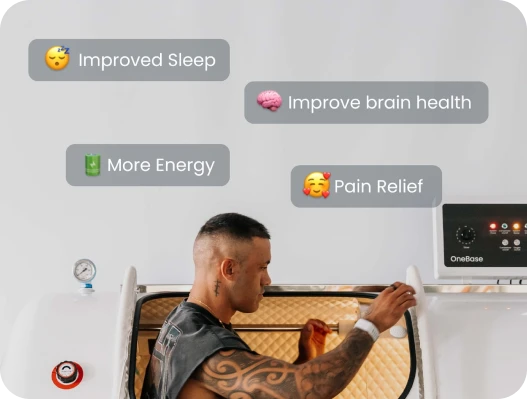
Have you ever watched a sci-fi movie and marveled at the miraculous healing pods that can mend broken bones in minutes? While we’re not quite there yet, Hyperbaric Oxygen Therapy (HBOT) is bringing us closer to that futuristic vision of medical care. In this post, we’ll explore how HBOT stacks up against the fantastical medbays of science fiction, and you might be surprised at how close we’re getting to making those dreams a reality.
Have you ever watched a sci-fi movie and marveled at the miraculous healing pods that can mend broken bones in minutes? While we’re not quite there yet, Hyperbaric Oxygen Therapy (HBOT) is bringing us closer to that futuristic vision of medical care. In this post, we’ll explore how HBOT stacks up against the fantastical medbays of science fiction, and you might be surprised at how close we’re getting to making those dreams a reality.
HBOT isn’t just another medical treatment – it’s a gateway to accelerated healing that seems almost too good to be true. But how does it work? Imagine stepping into a pressurized chamber, not unlike the healing pods you’ve seen in movies. As you breathe in pure oxygen under increased atmospheric pressure, your body’s tissues become supersaturated with this life-giving element. This flood of oxygen kickstarts your body’s natural healing processes, promoting rapid tissue repair and regeneration. HBOT’s historical roots date back to the 1970s, initially used for treating decompression sickness in divers. Since then, its applications have significantly expanded to include conditions such as carbon monoxide poisoning, chronic non-healing wounds, and certain infections. Today, HBOT is utilized in approximately 2,000 hospitals across the United States, with a growing number of specialized clinics offering treatments for conditions like traumatic brain injuries, stroke recovery, and even long COVID. (Source: Mayo Clinic) But HBOT isn’t just for divers with the bends anymore. It’s now used to treat a wide range of conditions, from stubborn wounds to brain injuries. Some folks even use it for general wellness and anti-aging benefits. Sounds a bit like those sci-fi medbays, doesn’t it?
Remember the bacta tanks in Star Wars or the medical bay in Elysium? These fictional healing chambers can cure almost anything in record time. They’re the stuff of dreams for anyone who’s ever been stuck in a hospital bed. In these futuristic scenarios, patients are often surrounded by a cocktail of healing gases or submerged in regenerative fluids. AI-driven systems diagnose and treat ailments in seconds, and invasive surgeries are a thing of the past. It’s a tantalizing vision of what healthcare could be.
While we can’t yet regrow limbs or cure all diseases with the push of a button, HBOT is bringing us closer to sci-fi healing than you might realize. Let’s break it down:
- Oxygen-rich healing environments? Check.
- Non-invasive treatments? Check.
- Accelerated healing? Double-check. HBOT works by saturating your body with oxygen, much like the healing atmospheres in fictional medbays. It’s completely non-invasive – no needles or scalpels required. And while it might not work as fast as movie magic, HBOT can significantly speed up your body’s healing processes. Of course, there are differences. HBOT treatments typically take longer and can’t treat the vast array of conditions that sci-fi tech seems to handle effortlessly. We’re also not quite at the level of AI-driven diagnoses and treatments… yet.
Exciting innovations are bringing HBOT even closer to its sci-fi counterparts. Portable hyperbaric chambers are in development, making treatments more accessible. Moreover, research into combination therapies—such as using HBOT alongside stem cell treatments—is ongoing, potentially enhancing its efficacy and versatility. These advancements are pushing the boundaries of what’s possible with HBOT, making it a step closer to the capabilities depicted in science fiction. (Source: National Library of Medicine) Who knows? In a few decades, we might be using HBOT chambers on Mars missions or integrating them with advanced AI systems for personalized treatments. The gap between science fiction and reality is narrowing every day.
HBOT’s healing power isn’t magic – it’s pure science. At the cellular level, the therapy floods your tissues with oxygen, stimulating the release of growth factors and mobilizing stem cells. This oxygen overload can:
- Boost your immune system
- Encourage the growth of new blood vessels
- Reduce inflammation
- Accelerate wound healing It’s like giving your body’s repair systems a supercharged energy drink!
So, how can you access this cutting-edge treatment? While HBOT isn’t as commonplace as a trip to your local clinic (yet), it’s becoming increasingly available. Many hospitals and specialized clinics offer HBOT treatments. A typical session lasts about 90 minutes, and you might need multiple treatments depending on your condition. It’s not as quick as sci-fi healing, but it’s a lot faster than many traditional treatments. However, it’s worth noting that while HBOT is generally safe, potential risks include ear pressure changes and, in rare cases, oxygen toxicity. Proper medical supervision is essential to mitigate these risks. (Source: Cleveland Clinic)